
Why Most Amateur Esports Players Plateau (And How to Break Through)
Discover why competitive gamers hit skill ceilings at mid-tier ranks and learn the structured approach pros use to break through performance barriers.
The Hidden Wall: Why Amateur Players Get Stuck
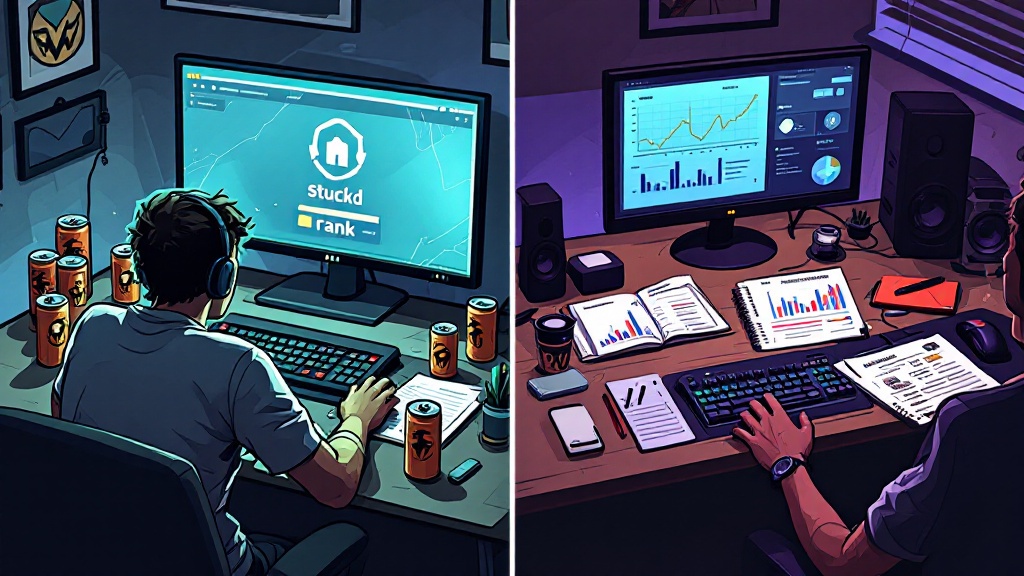
Every competitive gamer knows the frustration: you grind ranked matches for months, climb to Gold or Platinum, then suddenly... nothing. Your rank flatlines. Your win rate hovers around 50%. No matter how many hours you pour into the game, meaningful improvement feels impossible. This phenomenon isn't random—it's a predictable skill ceiling that affects the vast majority of amateur esports players.
The plateau happens because casual competitive gaming creates an illusion of practice without the structure that drives real improvement. You're playing constantly, but you're not actually training. Professional players don't just play more games; they approach each session with specific objectives, analyze replays methodically, and receive targeted feedback on decision-making patterns. Meanwhile, most amateur players queue into match after match with vague intentions to "get better" or "climb rank," repeating the same mistakes without the feedback loops necessary for skill development. The gap between amateur and professional esports training methodologies isn't about talent—it's about system design.
The Three Systemic Barriers Blocking Your Progress
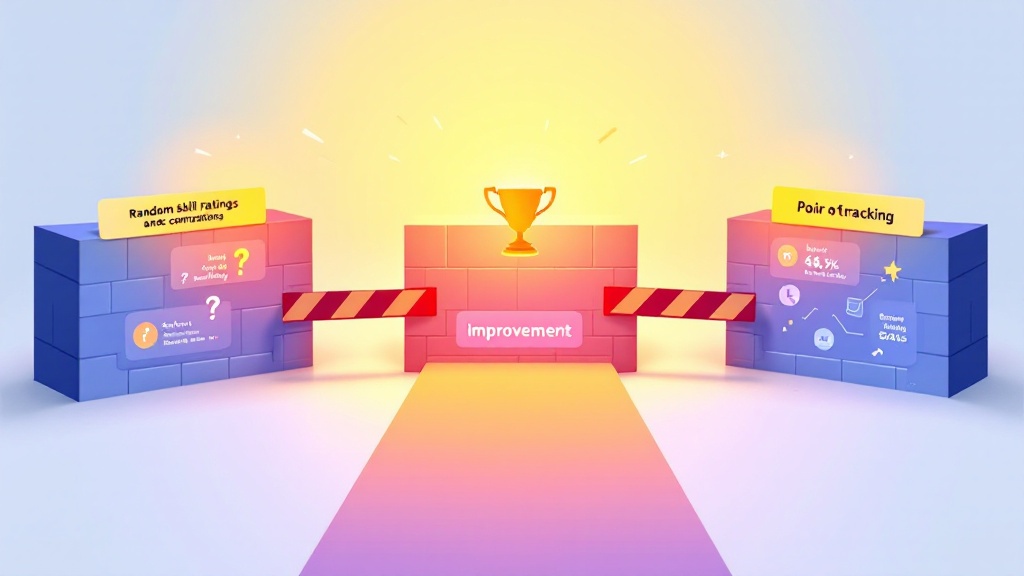
The first barrier is inconsistent competition quality. In traditional ranked queues, you face wildly varying opponent skill levels, team compositions, and match conditions. One game you're against smurfs, the next against tilted players, rarely encountering the consistent challenge level needed to identify and address specific weaknesses. Without controlled variables, it's impossible to measure whether your new strategy actually works or if you just got lucky with matchmaking.
The second barrier is absence of structured feedback. Most games provide only basic post-match statistics—kills, deaths, damage dealt—but these surface-level metrics don't reveal why you lost crucial team fights or missed win conditions. Professional players have coaches who review replays and identify decision-making patterns, but amateur players typically lack access to this analytical layer. You know you're making mistakes, but you can't pinpoint exactly what they are or how to fix them systematically.
The third barrier is poor performance tracking across your competitive journey. Your in-game rank is a lagging indicator that reflects past performance, not a diagnostic tool for player improvement. Without longitudinal data on your mechanical execution, map awareness, objective timing, and other granular metrics, you're flying blind. You might feel like you're improving, but without objective measurements, you're likely reinforcing bad habits while your actual skill progression stagnates.
Building Your Breakthrough: A Framework for Structured Improvement
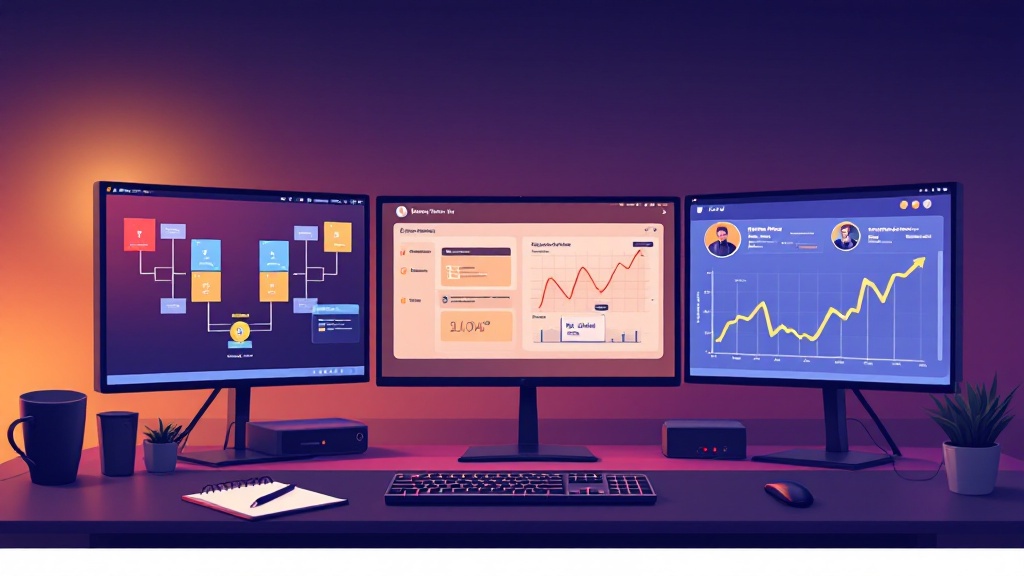
Breaking through your plateau requires adopting the deliberate practice framework that separates amateur esports from professional training. Start by creating consistent competitive conditions. Instead of endless solo queue grinding, commit to regular tournament play where match stakes and opponent motivation remain constant. Structured tournaments with automated brackets provide the controlled environment necessary to test specific strategies and measure their effectiveness across multiple games. This consistency transforms random practice into measurable skill development.
Next, implement systematic replay analysis. After each competitive session, review 2-3 critical moments where outcomes could have shifted—not just mechanical misplays, but strategic decisions and information usage. Ask specific questions: Did I track enemy cooldowns? Did I prioritize the correct objective? Was my positioning optimal for the team composition? Document these observations in a training journal, creating a personal database of decision-making patterns. Over time, this analytical habit rewires how you process information during live matches.
Finally, track granular performance metrics beyond your rank. Monitor game-specific indicators like CS per minute, vision score, ability accuracy, or objective control percentage across multiple tournaments. Platforms that integrate with game APIs can automatically calculate skill progression indicators and highlight improvement areas. When you can see objective data showing your map awareness improved 15% over four weeks, you gain the motivation and direction that vague rank climbing never provides. This is how amateur players transform into competitors ready for professional pathways—not through more games, but through smarter, structured competitive gaming practice.